

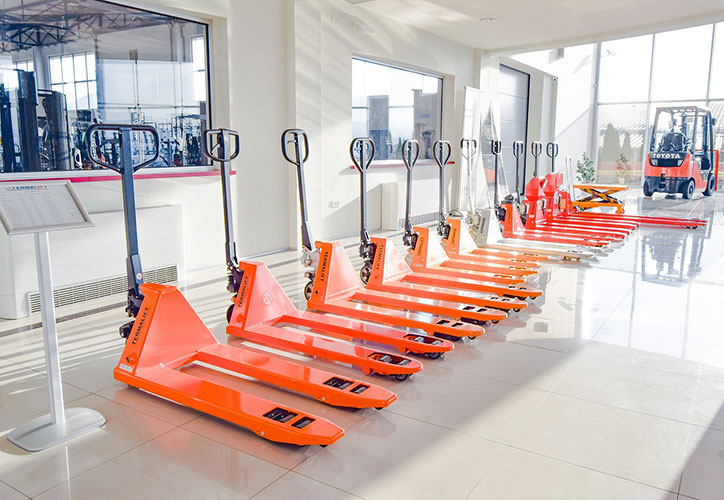
What makes pallet trucks essential for material handling?
Pallet trucks are essential because they move palletised goods quickly, safely and with far less physical effort than manual carrying, which is why they are found in almost every warehouse, factory and distribution centre. When it comes to material handling, the pallet truck stands out as an essential tool for maximum productivity and efficiency. These machines quietly ensure the smooth movement of goods. However, not all pallet trucks are the same. With various types tailored to specific tasks and environments, understanding their differences is key to optimising operations.
Discover the variety of pallet trucks, where innovation meets necessity. Each type, from manual to electric, brings unique strengths and considerations. Learn about their uses, application, and factors affecting their effectiveness along with additional points to consider outlined below.
TL;DR
- Manual pallet trucks are the cheapest and simplest option, best for short distances and light to medium loads, but they rely on operator effort.
- Electric pallet trucks remove manual pumping and suit high-volume, heavier indoor work, at a higher purchase price and with battery charging to manage.
- Semi electric pallet trucks power the lift but keep manual propulsion, giving a middle ground on cost and effort for light to medium duties.
- Specialist trucks, high lift, rough terrain, all terrain, ride-on and weighing models, solve specific problems such as stacking height, outdoor ground or weighing on the move.
- Choose by task and environment first: load weight, distance travelled, floor surface and indoor or outdoor use decide the right truck more than price alone.
- Powered pallet trucks need trained operators: under PUWER and the HSE code of practice L117, employers must ensure operators are competent before use.
What are the main types of pallet truck?
The main types are manual, electric, semi electric, high lift, rough terrain, all terrain, ride-on and weighing pallet trucks, each built for a different combination of load, distance and environment. The quick comparison below summarises where each one fits, and the sections that follow explain each in detail with its pros and cons.
| Pallet truck type | Power | Best suited to | Indoor or outdoor | Relative cost |
|---|---|---|---|---|
| Manual | Operator effort | Light to medium loads, short distances | Indoor | Lowest |
| Electric | Battery | High-volume, heavier loads | Indoor | Higher |
| Semi electric | Electric lift, manual push | Light to medium duty, cost-conscious sites | Indoor | Middle |
| High lift (scissor) | Manual or powered | Raising and stacking pallets | Indoor | Higher |
| Rough terrain | Powered | Uneven outdoor ground | Outdoor | Higher |
| All terrain | Electric | Mixed indoor and outdoor use | Both | Higher |
| Ride-on (stacker) | Battery | Long distances, heavy loads | Indoor | Higher |
| Weighing | Manual or powered | Weighing loads during transport | Indoor | Higher |
When should you use a manual pallet truck?
Use a manual pallet truck for light to medium loads over short distances, where a low purchase cost and simple maintenance matter more than speed. Manual pallet trucks, operated by hand, are the most fundamental type of pallet truck. They feature a hydraulic pump lever for lifting pallets and are suitable for light to medium-duty material handling tasks.
Despite their simplicity, manual pallet trucks are efficient for short-distance transportation within warehouses and small-scale operations. However, they require physical effort from the operator and may not be ideal for heavy loads or long distances. Because they have no battery or motor, they are always ready to use and are often kept as a reliable backup even on sites that mainly run powered equipment.
Pros
- Cost-effective initial investment.
- Simple to operate and maintain.
- No dependency on batteries or electricity.
- Suitable for small-scale operations and occasional use.
Cons
- Require physical effort from the operator, leading to fatigue.
- Limited load capacity compared to electric models.
- Not suitable for heavy loads or long-distance transportation.
- Slower operation speed compared to electric pallet trucks.
When is an electric pallet truck the right choice?
An electric pallet truck is the right choice for high-volume operations and heavier loads, where removing manual effort raises productivity and reduces operator fatigue. Electric pallet trucks, powered by batteries, offer effortless manoeuvrability and increased productivity. They eliminate the need for manual pumping, making them suitable for high-volume operations and heavy loads.
Commonly used in warehouses, manufacturing facilities, and retail environments, electric pallet trucks provide smooth and quiet operation, contributing to a more ergonomic work environment. The trade-off is that batteries must be charged and looked after, so sites running them heavily often plan charging around shifts or keep spare batteries to avoid downtime.
Pros
- Efficient and effortless operation, reducing operator fatigue.
- Increased productivity due to faster operation speed.
- Versatile and suitable for various material handling tasks.
- Smooth and quiet operation, contributing to a more ergonomic work environment.
Cons
- Require regular battery charging, leading to downtime.
- Higher initial investment compared to manual pallet trucks.
- Dependency on batteries may lead to operational disruptions if not managed properly.
- Limited outdoor use due to sensitivity to weather conditions and terrain.

What is a semi electric pallet truck best for?
A semi electric pallet truck is best for light to medium-duty work where you want powered lifting to save effort but do not need, or cannot justify, a fully electric model. Semi electric pallet trucks combine manual and electric functionalities, offering a balance between efficiency and affordability. They feature electric lifting mechanisms paired with manual propulsion, providing operators with increased productivity without the need for continuous battery charging.
Used in various industries for light to medium-duty material handling tasks, semi electric pallet trucks offer a cost-effective solution for organisations seeking to improve operational efficiency without investing in fully electric models. They are a sensible stepping stone for sites that are scaling up but are not yet ready to commit to a full electric fleet.
Pros
- Balance efficiency and affordability, offering a cost-effective solution for material handling tasks.
- Provide increased productivity with electric lifting mechanisms while maintaining manual propulsion.
- Suitable for light to medium-duty tasks in various industries.
- Reduce dependency on manual labour and improve operational efficiency.
Cons
- May not be suitable for heavy-duty tasks requiring continuous use.
- Require regular battery charging, leading to downtime if not managed effectively.
- Higher initial investment compared to manual pallet trucks.
- Limited availability of models and variations compared to fully electric pallet trucks.
What is a high lift (scissor lift) pallet truck used for?
A high lift pallet truck is used to raise pallets to working or stacking height, so it doubles as a lift table and a transport truck in one machine. High lift pallet trucks, equipped with a scissor mechanism, can elevate pallets to higher elevations. This feature enables operators to stack pallets vertically, maximising storage space in warehouses and distribution centers.
Ideal for loading and unloading goods from trucks and containers, high lift pallet trucks facilitate efficient organisation of inventory on racks and shelves. However, they may have height and weight limitations depending on the model, so it is important to match the truck to the heaviest load and greatest lift height you actually need.
Pros
- Maximise vertical storage space, allowing for efficient use of warehouse space.
- Enable stacking of pallets to higher elevations, reducing the need for additional storage racks.
- Facilitate loading and unloading of goods from trucks and containers at elevated heights.
- Improve warehouse organisation and inventory management.
Cons
- Height limitations may restrict their use in warehouses with low ceiling heights.
- May have weight limitations, impacting their ability to lift heavy loads to higher elevations.
- Require skilled operators to handle safely at elevated heights.
- Higher initial investment compared to standard pallet trucks.
When do you need a rough terrain pallet truck?
You need a rough terrain pallet truck when work happens outdoors on uneven ground, such as construction sites or agricultural yards, where a standard truck’s small wheels would simply sink or stall. Rough terrain pallet trucks are designed for outdoor use on uneven surfaces such as construction sites and agricultural settings. They feature robust tires and rugged construction to withstand harsh environments and rough terrain conditions.
Indispensable for industries where traditional pallet trucks would struggle, rough terrain pallet trucks enhance efficiency in outdoor material handling operations, contributing to increased productivity. Their larger wheels and stronger frames are what allow them to keep moving loads where indoor equipment cannot cope.
Pros
- Suitable for outdoor use on uneven surfaces such as construction sites and agricultural settings.
- Feature robust tyres and rugged construction to withstand harsh environments.
- Enhance efficiency in outdoor material handling operations, contributing to increased productivity.
- Reduce the need for manual labour and reliance on traditional methods of material transport.
Cons
- Limited indoor manoeuvrability due to larger size and design.
- Higher maintenance requirements compared to standard pallet trucks.
- May have higher initial investment costs due to specialised features and construction.
- Require operator training to navigate safely on rough terrain surfaces.
What is an all terrain pallet truck?
An all terrain pallet truck is a versatile machine that handles both smooth indoor floors and uneven outdoor ground, so one truck can follow a load from yard to warehouse. Combining the maneuverability of electric pallet trucks with the ruggedness of rough terrain models, all terrain pallet trucks are versatile machines capable of operating on various surfaces. They offer a flexible solution for both indoor and outdoor environments.
Commonly used in construction, landscaping, and agriculture, all terrain pallet trucks enable seamless transportation of goods between different spaces without the need for multiple machines. For businesses that move goods across mixed environments, this flexibility can remove the cost and clutter of running separate indoor and outdoor equipment.
Pros
- Versatile machines capable of operating on various surfaces, both indoor and outdoor.
- Combine the manoeuvrability of electric pallet trucks with the ruggedness of rough terrain models.
- Offer a flexible solution for businesses with diverse material handling needs.
- Reduce the need for multiple machines, streamlining operations and reducing costs.
Cons
- Higher initial investment compared to standard pallet trucks.
- May be more expensive to maintain due to specialised features and components.
- Require operator training to handle safely on different types of terrain.
- Limited availability of models and variations compared to standard pallet trucks.

When is a ride-on pallet truck (pallet stacker) worth it?
A ride-on pallet truck is worth it when operators cover large distances or move heavy loads all shift, because riding rather than walking cuts fatigue and lifts throughput. Ride-on pallet trucks, also known as pallet stackers, feature a platform or seat for the operator to ride on while operating the truck. They are designed to cover large distances or handle heavy loads efficiently, reducing operator fatigue and increasing productivity.
Widely used in distribution centres, logistics facilities, and manufacturing plants, ride-on pallet trucks offer ergonomic benefits and enhanced manoeuvrability, allowing operators to navigate tight spaces with ease. Because they are powered and carry a rider, safe operation depends on proper training and disciplined use in busy, shared spaces.
Pros
- Increase operator efficiency and productivity by reducing physical strain and fatigue.
- Ideal for covering large distances or handling heavy loads efficiently.
- Improve operator comfort and safety with ergonomic design features.
- Enhance manoeuvrability, allowing operators to navigate tight spaces with ease.
Cons
- Require initial investment in training for operators.
- Higher maintenance requirements compared to manual pallet trucks.
- May have higher initial purchase costs compared to standard pallet trucks.
- Dependency on battery power may lead to downtime if not managed effectively.
What is a weighing pallet truck for?
A weighing pallet truck is for weighing loads at the point of handling, so goods can be checked and recorded without a separate trip to a weighbridge or floor scale. Weighing pallet trucks integrate weighing scales into the pallet truck, allowing operators to weigh loads directly during transportation. This eliminates the need for separate weighing processes, streamlining operations and improving accuracy.
Utilised in industries where precise weight measurements are critical, such as logistics, shipping, and inventory management, weighing pallet trucks enable real-time tracking of goods and ensure compliance with weight regulations. To stay accurate, the built-in scales need regular calibration, which is a small overhead against the time they save.
Pros
- Improve accuracy in weight measurements, reducing the risk of errors and discrepancies.
- Streamline operations by combining weighing and transportation processes into one step.
- Ensure compliance with weight regulations in industries where precise measurements are critical.
- Enable real-time tracking of goods, enhancing inventory management and stock control.
Cons
- Higher initial costs compared to standard pallet trucks.
- Require regular calibration and maintenance to ensure accuracy.
- Limited availability of models and variations compared to standard pallet trucks.
- May have lower load capacity due to the integration of weighing scales.

What else should you consider before choosing a pallet truck?
Beyond the type of truck, weigh up load capacity, maintenance, operator training, ergonomics, cost, customisation, environmental impact, regulatory compliance and how the truck fits your systems. Each of these factors is covered below so you can match the right machine to your site and your legal duties.
How important is load capacity?
Load capacity is one of the most important factors, because overloading a truck is a direct safety risk. Understanding the load capacity of each type of pallet truck is crucial. It ensures that the truck can safely handle the weight of the goods being transported. Overloading a pallet truck can lead to accidents and damage to both the goods and the equipment.
What maintenance do pallet trucks need?
Pallet trucks need regular inspection, lubrication and prompt repair to stay safe and reliable. Proper maintenance is essential to ensure the longevity and performance of pallet trucks. Regular inspections, lubrication of moving parts, and timely repairs are necessary to prevent breakdowns and ensure safety in operations.
Why does operator training matter?
Operator training matters because safe, efficient handling depends on skill and knowledge, and because employers have a legal duty to ensure competence. Operating a pallet truck requires skill and knowledge to ensure safe and efficient handling of goods. Providing comprehensive training to operators on the proper use of pallet trucks, safety protocols, and maintenance procedures is vital to prevent accidents and injuries in the workplace.
How does ergonomic design help?
Ergonomic design helps by reducing operator fatigue and injury risk, which in turn improves productivity. Many modern pallet trucks are designed with ergonomic features to reduce operator fatigue and improve efficiency. Features such as adjustable handle heights, cushioned grips, and smooth steering mechanisms contribute to a more comfortable and productive work environment.
What are the cost considerations?
The main cost consideration is total cost of ownership, not just the purchase price, because running and maintenance costs add up over time. While investing in high-quality pallet trucks can lead to long-term cost savings through increased productivity and reduced maintenance costs, it’s essential to consider the initial investment and ongoing expenses associated with each type of pallet truck.
Can pallet trucks be customised?
Yes, pallet trucks can be customised with accessories and attachments to suit specific tasks and floor types. Pallet trucks can be customised with various accessories and attachments to suit specific application requirements. These include options such as different fork lengths and widths, specialised wheels for specific floor surfaces, and additional safety features like bumpers and warning lights.
What is the environmental impact?
Choosing electric or semi-electric models can reduce the environmental impact of material handling compared with some alternatives. Choosing electric or semi-electric pallet trucks over traditional manual ones can have environmental benefits by reducing carbon emissions and noise pollution in the workplace. Additionally, opting for models with energy-efficient features can contribute to sustainability efforts.
What are the regulatory compliance requirements?
Compliance means following the health and safety rules that govern workplace equipment, and ensuring operators are trained and competent. Ensuring adherence to regulatory standards and guidelines is imperative for operating pallet trucks within the workplace. Compliance with regulations set forth by governing bodies such as the Health and Safety Executive (HSE) ensures the safety of workers and helps to mitigate the risk of accidents and potential legal liabilities.
Can pallet trucks integrate with warehouse management systems (WMS)?
Yes, some pallet trucks integrate with warehouse management systems to track inventory and optimise workflows in real time. Some pallet trucks are equipped with technology that allows them to integrate seamlessly with warehouse management systems. This integration enables real-time tracking of inventory, optimisation of workflows, and data-driven decision-making for improved efficiency.
What future trends should you watch?
Watch automation, robotics and connected (IoT) equipment, as these are reshaping how goods are moved. Keeping abreast of emerging trends and innovations in pallet truck technology can help businesses stay competitive and future-ready. Trends such as automation, robotics, and the Internet of Things (IoT) are transforming the material handling industry and offer opportunities for enhanced efficiency and productivity.
What are the key safety requirements?
The key safety requirements are correct PPE, secure and within-capacity loads, trained operators and constant awareness of surroundings. When operating pallet trucks, operators should wear appropriate personal protective equipment (PPE) such as safety shoes and gloves. They should also ensure that the load is properly secured on the pallet and that the truck is used within its specified weight capacity. Additionally, operators should be trained on proper handling techniques and be aware of their surroundings to prevent accidents.
Frequently Asked Questions
Do you need a licence to operate a pallet truck?
There is no government-issued pallet truck licence, but powered pallet trucks require proper operator training. Under PUWER and the HSE code of practice L117, employers must ensure operators are trained and competent before using powered equipment. A simple hand pallet truck needs safe handling but does not fall under powered lift truck rules in the same way.
What is the difference between a pallet truck and a forklift?
A pallet truck lifts a pallet just clear of the floor to move it horizontally, while a forklift can raise loads to height for stacking and racking. Pallet trucks are lighter, cheaper and mainly for transport, whereas forklifts are larger machines built for lifting and stacking. Many warehouses use both, with pallet trucks for ground-level movement and forklifts for vertical work.
Which pallet truck is best for indoor use?
Manual, electric and semi electric pallet trucks are all suited to indoor use on smooth, level floors. Electric models are best for high-volume or heavier indoor work because they remove operator effort, while manual trucks suit lighter, occasional tasks. Rough terrain trucks are generally too large and are designed for outdoor ground instead.
Which pallet truck should I choose for outdoor use?
Choose a rough terrain pallet truck for uneven outdoor ground, or an all terrain model if you also need to work indoors. These trucks have larger wheels and stronger frames that cope with surfaces where a standard truck would struggle. Standard electric pallet trucks are best kept indoors, as they are sensitive to weather and rough surfaces.
Are electric pallet trucks better than manual ones?
Electric pallet trucks are better for high-volume, heavier work because they reduce fatigue and increase speed, but they are not always the right choice. Manual trucks cost less, need no charging and are simpler to maintain, which makes them ideal for light or occasional use. The best option depends on load weight, distance and how often the truck is used.
How do I choose the right pallet truck for my business?
Start with the task and environment: the load weight, the distance travelled, the floor surface and whether work is indoors or outdoors. These factors point you to the right power source and truck type before you consider budget. It is also worth allowing for maintenance, operator training and any need to stack, weigh or work on rough ground.
How often should pallet trucks be inspected?
Pallet trucks should be inspected regularly as part of a planned maintenance routine, with operators carrying out basic pre-use checks. Regular inspection, lubrication of moving parts and timely repairs prevent breakdowns and keep the truck safe to use. The right frequency depends on how heavily the truck is used and the manufacturer’s guidance.
Is training required for a ride-on pallet truck?
Yes, ride-on pallet trucks are powered machines that carry an operator, so proper training is essential for safe use. Employers have a legal duty under PUWER and HSE guidance to ensure operators are competent before they use powered equipment. Training also helps protect people and stock in the busy, shared spaces where these trucks are used.
Does AFTT provide pallet truck training?
Yes, Advanced Fork Truck Training provides pallet truck training as an AITT-accredited training provider. Our training gives your team a thorough understanding of pallet truck operation, safety and maintenance so they can work efficiently and within the rules. You can call us on 01438 222157 to discuss the right course for your site.
Can pallet trucks weigh loads while moving them?
Yes, weighing pallet trucks have integrated scales that let operators weigh a load during transport. This removes the need for a separate weighing step and helps with accuracy, stock control and compliance with weight limits. The scales need regular calibration to stay accurate.
Summary
Pallet trucks play a vital role in material handling operations across various industries, offering efficiency, versatility, and productivity. By understanding the different types of pallet trucks and their respective uses, businesses can optimise their warehouse and distribution processes accordingly, leading to cost savings and better productivity.
Ready to improve your material handling operations? Our pallet truck training provides the tools to boost productivity and efficiency in your workplace. With a thorough understanding of pallet truck operation and maintenance, your team will be equipped to optimise operations effectively. Contact us today on 01438 222157 for further advice or to register for training on one of our courses.

- Counterbalance Forklift Training in the UK - 6th July 2026
- Forklift Training Cost: What Employers Actually Pay and Why It Matters - 7th May 2026
- Plant Operator Training - 4th April 2026


