
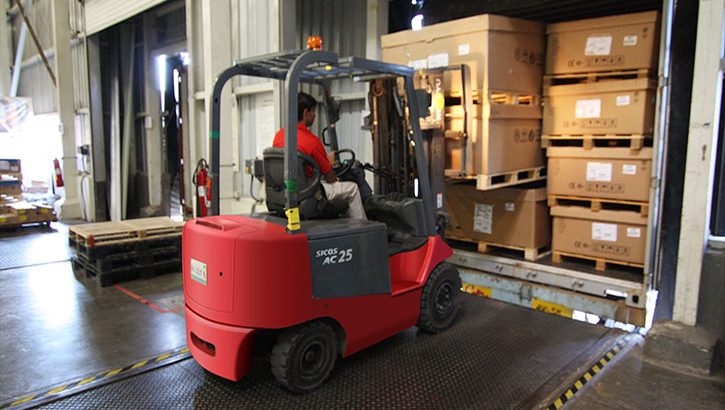
Operating a forklift entails working with some serious machinery. Safety is priority number one for not only the operator but also those working around them. Similar to cars, forklifts require frequent service and maintenance.
In order to reduce the risk of injury and dangerous incidents, it is important that your equipment is kept in tiptop condition. Neglecting to maintain and service a forklift on a regular basis could result in a decrease in performance or worse, put workers at higher risk for dangerous incidents to occur.
To keep your material handling equipment well maintained and in check, here are 3 important steps to servicing and maintaining your forklift.
TL;DR
- Forklift maintenance is a safety issue first: a poorly maintained truck puts the operator and everyone nearby at higher risk.
- Be proactive: catching problems early saves money, extends the truck’s lifespan and avoids premature replacement.
- Daily and weekly checks are the front line: the RTITB recommends operators perform safety checks daily, paying close attention to the heels, tips, forks and hooks.
- Follow the manufacturer’s service intervals, which are based on the hour clock reading, not just the calendar.
- Environment changes how often you service: cold, moisture, chemicals and flooring can all shorten service intervals.
- Combine daily checks with scheduled servicing to keep a forklift safe, functional and long-lasting.
Why should you be proactive with forklift maintenance?
Being proactive means catching small problems before they become big, expensive or dangerous ones. When you fail to perform regular maintenance on your forklift truck, you are allowing room for big mechanical problems to occur.
 Equipment problems which are not caught early on can result in costly repairs, decrease the lifespan of your forklift, and even put your workers at serious risk.
Being proactive with your maintenance means catching problems early, saving you money and in turn extending the lifespan of your forklift so you won’t have to replace it prematurely, but most importantly keeping your operators and work environment as safe as possible.
The best way to be proactive in your maintenance is to conduct daily and weekly checks on all material handling equipment, and keep up with your equipment’s service intervals.
What daily checks should a forklift operator do?
An operator should carry out a safety check every day before use, on top of scheduled inspections. Before beginning use of a forklift, it is highly recommended by the RTITB that an operator perform safety checks daily in addition to scheduled equipment inspections as forklifts are moving heavy loads on a continual basis. It is important to check each portion of the machine’s parts, paying closer attention to the heels, tips, forks, and hooks. By conducting daily checks, an operator is ensuring that all equipment is being regularly maintained and any repairs are made the moment a problem is discovered. The goal is for your equipment to always be in safe working condition, so that operators can get the job done and safeguard against dangerous accidents.
For more information on conducting forklift inspections, read Forklift Safety Inspection
How often should a forklift be serviced?
Service a forklift around the manufacturer’s recommended intervals, which are based on the hour clock reading rather than the calendar. In addition to daily checks, scheduled service intervals should be scheduled. Material handling equipment, such as forklifts, require frequent service and maintenance just like any other machinery. Regular maintenance should be conducted around your equipment manufacturer’s recommended service intervals. These service intervals are based on the hour clock reading. The environment that your forklift is operating in can also have an affect on the service intervals. Environmental factors include conditions of colder temperatures, excess moisture, exposure to chemicals, and even the flooring the forklift is operating on.
Develop a proper schedule for your forklifts service intervals. A company may do this through working with their service provider to conduct service visits, preventative maintenance and thorough examinations. By checking your material handling equipment daily as well as conducting scheduled service intervals, you will be taking the necessary steps to maintaining a safe and functional forklift.
Daily checks versus scheduled servicing: what is the difference?
Daily checks and scheduled servicing do different jobs, and you need both. The table below sums up how they compare.
| Aspect | Daily operator checks | Scheduled service intervals |
|---|---|---|
| Who does it | The operator, before use | Your service provider or engineer |
| How often | Every day, plus weekly checks | At the manufacturer’s recommended intervals |
| Based on | Visual and functional inspection | The hour clock reading and environment |
| Focus | Heels, tips, forks, hooks and obvious faults | Preventative maintenance and thorough examinations |
| Main benefit | Catches faults the moment they appear | Prevents wear-related failures over time |
Frequently Asked Questions
Why is forklift maintenance so important?
Forklift maintenance is important because safety is the first priority, for the operator and for everyone working around them. A forklift that is not maintained can lose performance and put workers at higher risk of dangerous incidents. Regular servicing also protects your investment by extending the truck’s lifespan.
What are the three steps to maintaining a forklift?
The three key steps are being proactive with maintenance, conducting daily checks, and keeping up with scheduled service intervals. Being proactive catches problems early, daily checks keep the truck in safe working condition, and scheduled servicing addresses wear over time. Together they keep a forklift safe and functional.
How often should you do forklift safety checks?
Operators should perform safety checks daily before using the forklift, in addition to scheduled inspections. This is highly recommended by the RTITB because forklifts move heavy loads continually. Weekly checks on all material handling equipment add a further layer of protection.
What parts of a forklift should be checked daily?
Daily checks should cover each part of the machine, with closer attention to the heels, tips, forks and hooks. The aim is to find any fault the moment it appears so a repair can be made straight away. Keeping the truck in safe working condition protects both the operator and the load.
How often should a forklift be serviced?
A forklift should be serviced around the manufacturer’s recommended service intervals, which are based on the hour clock reading rather than the calendar. Heavier use therefore means more frequent servicing. Working with a service provider to plan these visits keeps the schedule on track.
Does the working environment affect forklift servicing?
Yes. Colder temperatures, excess moisture, exposure to chemicals and even the type of flooring can all affect how often a forklift needs servicing. Trucks working in harsher conditions generally need shorter service intervals. It is worth factoring your specific environment into the schedule.
What happens if you neglect forklift maintenance?
Neglecting maintenance allows small mechanical problems to grow into big ones. Faults that are not caught early can lead to costly repairs, a shorter lifespan and premature replacement, and most seriously they put workers at higher risk. Proactive maintenance avoids all three outcomes.
Who should carry out forklift maintenance and examinations?
Daily safety checks are carried out by the operator before use, while scheduled servicing, preventative maintenance and thorough examinations are usually handled by a service provider. Combining both means faults are caught quickly and long-term wear is managed properly. This is the safest way to keep a forklift functional.
Does trained operating help keep a forklift well maintained?
Yes. Operators who are properly trained know how to carry out daily checks correctly and how to spot and report faults early. As an AITT-accredited training provider, we build safe operation and daily inspection into our forklift training. That gives employers documented proof their operators can help keep equipment safe.
For more information about advanced forklift training including forklift safety and full driver training please contact us today.

- Counterbalance Forklift Training in the UK - 6th July 2026
- Forklift Training Cost: What Employers Actually Pay and Why It Matters - 7th May 2026
- Plant Operator Training - 4th April 2026


