


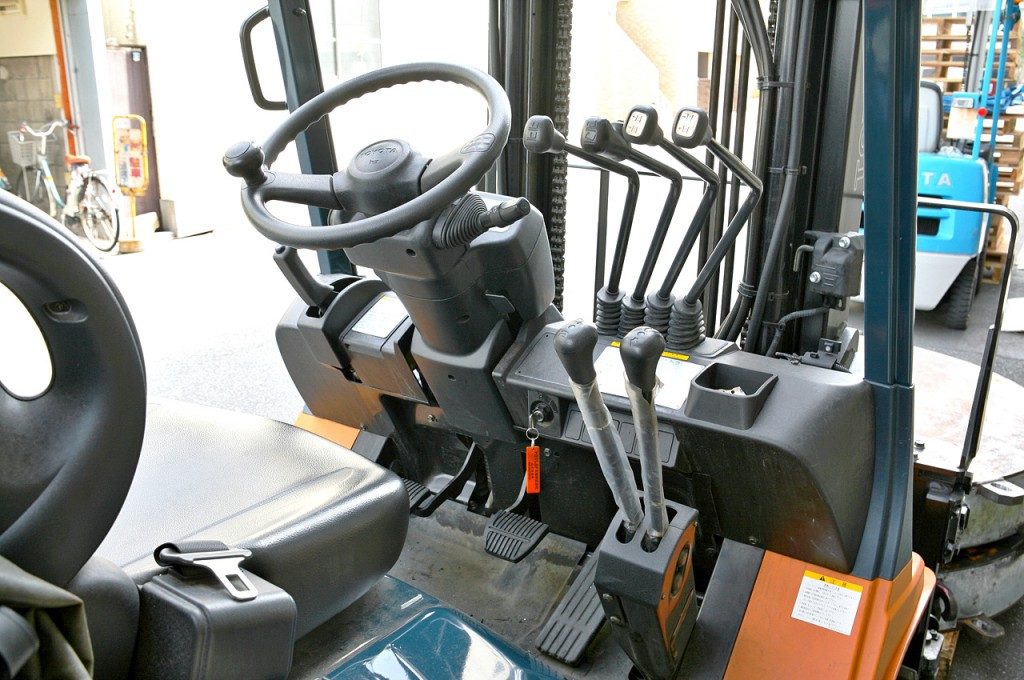


Forklift operators are also responsible for the safety of those working around them. A pre use and post use inspection is the practical way to meet that duty, and it only takes a few minutes to run through the key parts of the machine and the working area.
TL;DR
- Inspect the forks, tips, heels and hooks every shift, because these bear the load and a failure can drop or shift cargo and tip the truck.
- Check the heels for cracks, as the weight of a load stretches the metal of the shaft and small cracks grow larger over time.
- Test tyre pressure, because a tyre that looks fine but is under inflated can tip the truck, especially when carrying loads or turning.
- Check fuel, oil, water, radiator and hoses before and after use, and report leaking valves, bad fluids or loose parts.
- Clear the working area of debris, spills and ice, and mark potholes or dips so the operator has a clear path.
- Report anything that does not look right to a maintenance crew member, and let accredited training explain why each check matters.
Why does a forklift inspection matter before and after use?
A forklift inspection matters because it catches worn or broken parts before they cause an accident. Each operator is responsible for keeping their machine in top condition, and if there is anything at all worn or broken that might cause injury it is up to them to report the problem and get it fixed. It protects the operator and everyone working around the truck, and it is a routine every trained operator learns to run without fail.
Which forklift parts should you inspect first?
Start with the parts that carry the load: the heels, tips, forks and hooks. Because they bear heavy loads, the forks are always strained and could be damaged from normal everyday use. If a fork breaks while carrying or lifting a load, people could be hurt and inventory damaged. The same goes for hooks: when cargo is lifted and moved, the hooks are secured to the shaft so that the load is more stable and the forks have some support, and if one of these breaks it can cause the load to shift or fall. If a load shifts quickly, the forklift can tip.
How do you check the heels and tips for damage?
Check the heels and tips for visible cracks and wear, because they are stressed every time a load is lifted. The weight of a load actually stretches the metal of the shaft and causes tiny cracks which become larger over time, so if a crack is visible the truck must be repaired. Heels also make contact with the floor, so it is important to check them for wear, which can also show on the tips. If they are damaged or worn, it can make loading and unloading difficult.
Why is tyre pressure so important on a forklift?
Tyre pressure is important because a tyre that looks fine but is actually low can easily tip the truck over. This is especially true when lifting and carrying loads or when turning. A tyre that is low should be filled and checked again to make sure it is holding air, and if it is not, it must be replaced promptly.
What fluids and mechanical checks belong on the list?
Check fuel, oil, water and the cooling system on every inspection. Fuelling up should be part of any post operation forklift checklist, but checking fuel levels before using the machine helps make sure it does not run low, or run out at a bad time. Oil pressure and temperature both keep a forklift running well, so make sure the machine is not losing oil or water, and check the radiator and hoses for leaks. Other faults such as leaking valves, bad fluids and loose parts can also cause a malfunction, so proper maintenance of the forklift trucks keeps them working well for many years. Always tell a maintenance crew member about anything that does not look right.
What should you check in the working area?
Look beyond the machine to the space it will work in. Making sure that all of the safety equipment is present and ready for use keeps the operator safe. Clearing out any loose debris or rubbish is another important step before operating a forklift, because the operator needs a clear path free of spills and ice wherever possible. Potholes on hard surfaces, or soft sand and dips on dirt, must be marked clearly to stop avoidable mistakes from happening.
How does forklift inspection compare across the machine?
Each part of the truck fails in a different way, so it helps to know what to look for and what happens if a fault is missed. The table below summarises the main inspection points.
| Inspection point | What to check | Risk if ignored |
|---|---|---|
| Forks and hooks | Wear, strain and breaks | Load drops or shifts, people hurt, inventory damaged |
| Heels and tips | Cracks and floor wear | Difficult loading, structural failure |
| Tyres | Correct air pressure | Tip over when carrying or turning |
| Fluids and cooling | Fuel, oil, water, radiator, hoses | Breakdown, overheating, leaks |
| Working area | Debris, spills, ice, potholes | Slips, collisions, avoidable accidents |
How does training turn these checks into habit?
Good forklift training turns these inspections into an automatic routine. For all of this information, and more, a good forklift training company is a strong provider of safety knowledge. Training places safety practices into the minds of operators and gives them the reasons behind each check before a shift, helping them remember exactly why things are done as they are and what could happen if they do not take them seriously. AFTT is an AITT accredited training provider, so its documented, certificated courses give employers independent proof that operators understand these responsibilities.
Frequently Asked Questions
Why should you inspect a forklift before and after use?
Inspecting a forklift before and after use catches worn or broken parts before they cause injury. Each operator is responsible for keeping their machine in top condition and reporting any fault that could cause harm. The check protects the operator and everyone working nearby.
Which forklift parts are most important to inspect?
The most important parts are the load bearing ones: the forks, tips, heels and hooks. They are strained every time a load is lifted and can fail from normal everyday use. A broken fork or hook can drop or shift a load, hurt people and even tip the truck.
How do you know if a forklift fork is unsafe?
A fork is unsafe if it shows wear, damage or any visible crack. Because forks bear heavy loads they are always strained, and the metal can develop cracks that grow larger over time. If a crack is visible on the fork or heel, the truck must be repaired before use.
Why does forklift tyre pressure matter?
Tyre pressure matters because a tyre that looks fine but is under inflated can easily tip the truck, especially when carrying loads or turning. A low tyre should be filled and checked again to confirm it is holding air. If it is not, it must be replaced promptly.
What fluids should be checked on a forklift?
Check fuel, oil and water, and inspect the radiator and hoses for leaks. Fuel should be checked before use so the machine does not run out at a bad time, and topped up after operation. Oil pressure and temperature both keep the forklift running well.
What should be included in the working area check?
The working area check covers safety equipment, a clear path and marked hazards. Loose debris, spills and ice should be cleared wherever possible, and potholes, soft sand or dips should be marked clearly. This gives the operator a clean, predictable route.
Who is responsible for forklift safety inspections?
Each operator is responsible for inspecting their own machine and for the safety of those working around them. They must report anything worn, broken or leaking to a maintenance crew member. Proper maintenance then keeps the truck working safely for years.
How does training help with forklift inspections?
Training turns inspections into habit by explaining the reasons behind each check, not just the steps. Operators learn what could go wrong and why the checks matter, so they take the routine seriously. AFTT is an AITT accredited training provider that delivers this as documented, certificated training.
Is a daily forklift inspection a legal requirement in the UK?
Employers are legally required under PUWER and the HSE approved code of practice L117 to keep work equipment safe and to ensure operators are trained and competent. A regular pre use inspection is a practical part of meeting that duty. Accredited training helps operators carry it out correctly.


- Counterbalance Forklift Training in the UK - 6th July 2026
- Forklift Training Cost: What Employers Actually Pay and Why It Matters - 7th May 2026
- Plant Operator Training - 4th April 2026


